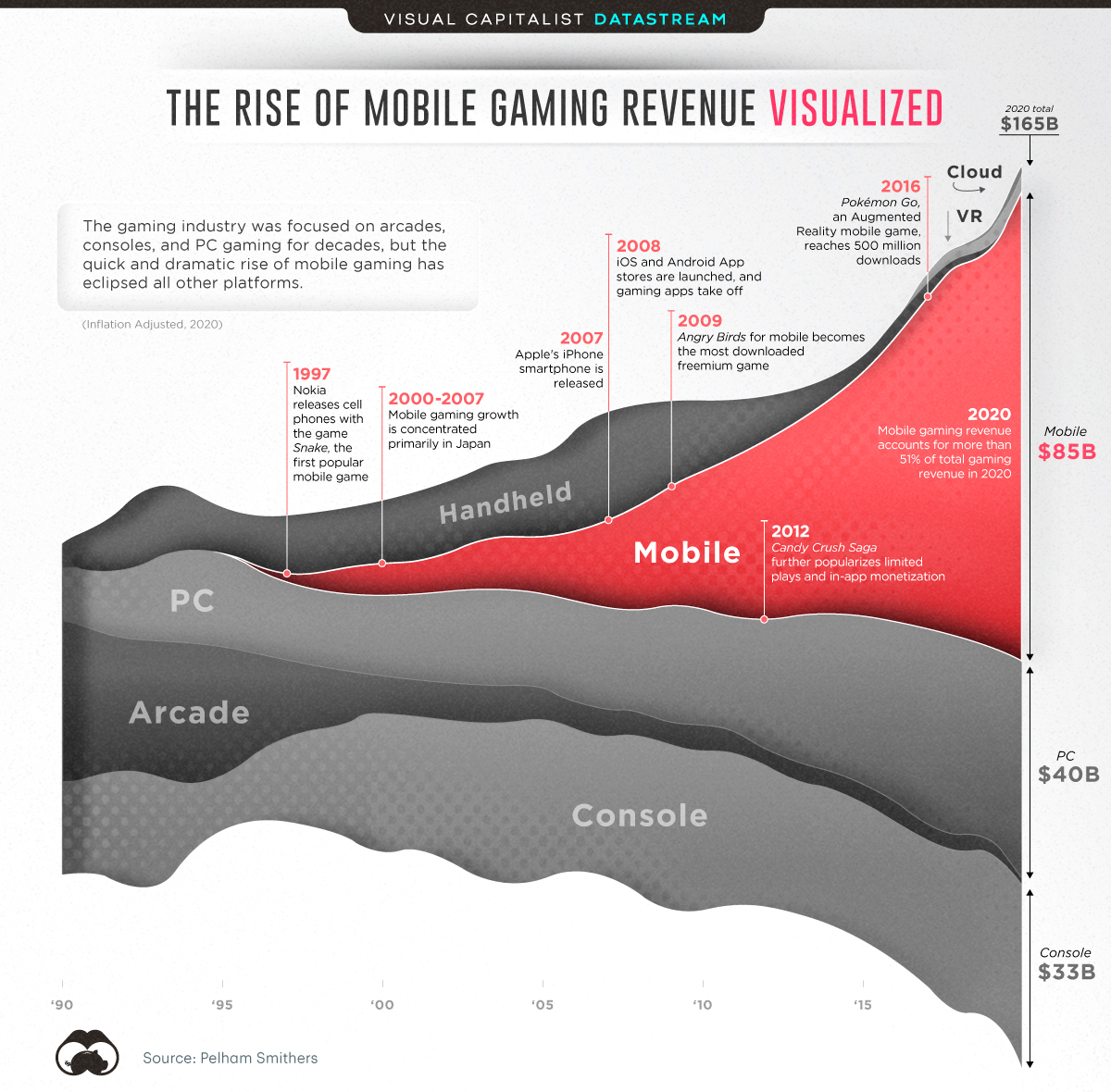
So as we all know, humans love sporting activities. Here is a brief history of the virtual gaming industry and how we reached it here; this gives us a different view of the gaming industry.
The definition of a Game could be "doing an activity requiring competition and skill". Today when we say the word 'Game', video games come to our mind or mobile games for gen-Z's sake. But it was not the same few decades ago. Depending on the region, there were physical sports, indoor board games, some indie games and some custom games. Still, this changed as computers came to market and another revolution happened due to Smartphones.
We can fundamentally categorize gaming into multiple segments: professional players, recreational players, audience, broadcasting companies, sporting teams and academies, infrastructure providers, and Hardware providers. Different type of companies fills these spaces for different kinds of game industries. There are three game industries physical sports, indoor brain sports like chess, snooker, and carrom, and Virtual sports like PC, console, and Mobile.
We will be focusing on virtual sports and games while other forms are still present and growing.
Here is an illustration to depict the progress and change in virtual gaming since the 90s.
Tech has always been the pushing factor for these when a new type of tech comes, so the games and playing style change.
Let's get deep into the evolution of virtual gaming. It was first started in the 50s by computer scientists who began it as a simulation but ended up making games like Nimrod and tic-tack-toe. But it took almost 20 more years to come to market with Pong as the first Game available to the public by Atari; this started the concept of Arcade Gaming with gaming parlours and coin payment to play games exploded. The 70s and 80s were called the golden age due to coin-operated gaming machines. This success was based on minicomputers first being the DEC(Digital Equipment Corporation's first 12-bit PDP-8 followed by the revolution with Integrated circuit designs, making them much cheaper and smaller. This led to exponential development in small computers as the revenue grew 10x in just two years. Instead of gaming parlours, personal consoles began selling due to the market's oversaturation with Arcades and many games. Soon the tech reached the point personal computers were introduced with Apple II and Commodore PET as data could be stored on ROM cartridges. Nintendo Entertainment System was one the most successful personal console gaming setup. Also, Japan and US were the two big markets then, so you can see many big gaming companies from these regions. Soon after the consoles transitioned to CD-based games, Nintendo experimented with optical drive media formats in a joint venture with Sony, which developed the concept into the PlayStation. Sonic the Hedgehog was released in 1991 versus Nintendo's Mario, which started the console war. Around 1989, handheld consoles emerged, and Game Boy by Nintendo was the most popular option. Best-selling titles were Tetris, Pokémon Red, Green and Blue, Super Mario Land, and Sonic the Hedgehog 2.
After this, we shifted completely to digital gaming with standardized platforms like windows and architecture for hardware. The transition from graphics from raster to 3D due to Pentium processors paved the way for genres like FPS, real-time strategy and MMO games. Around this time, the Nokia mobile phone was also a big hit; as you all will remember, the iconic SNAKE game was also a big hit. This period around 2000 witnessed the most significant growth in technology. Due to stiff competition b/w the intel and Nvidia, the processors jumped from 60mhz to 1 GHz, and all sorts of specifications achieved exponential increment. Games like GTA lll, counter-strike, half-life, etc., came out and got over-popularized. In 2001 Microsoft released Xbox with Halo.
Since that, no fundamental shift in the way of playing games has happened till now. We have 3 ways to play PC, Console, Mobile etc., with similar games but much more advanced. The only significant development after 2005 was the rise of smartphone technology and the Internet. The gaming industry, riding the tide of tech, moved to the Internet with connected games; PC& Playstation games were internets connected. Initially, there were simple, touched, and highly engaging fun games for mobile gaming, but as tech transformed. The size of transistors came less than the performance of mobile processors in the league of lower-end PCs. Hence, we started having good mobile games which were more accessible and fun to play due to touchscreen, small size factor, portability, etc. This industry exploded and continues to do so. A new type of economics started with a freemium model. While earlier, you were charged to buy the Game or for playing the Game on a time basis but here, freemium models have become successful. At the same time, companies made money with microtransaction and buying in-game items. In 2009, Apple announced in-app purchase features for iPhone.
Effects and complementary things with Online Gaming
Online gaming has exploded with popularity and has been the most profitable industry on the planet. The industry is growing at a rate of 9% CGAR with a size of 196B dollars, with many significant sectors developing alongside streaming, game development, esports, etc.

The Gaming world has been trying to establish itself as significant as physical sports. It is fundamentally moving in the same direction as its a lot young field. It's still a lot to go as the sports market is around 500B+ and gaming is around 200B+.
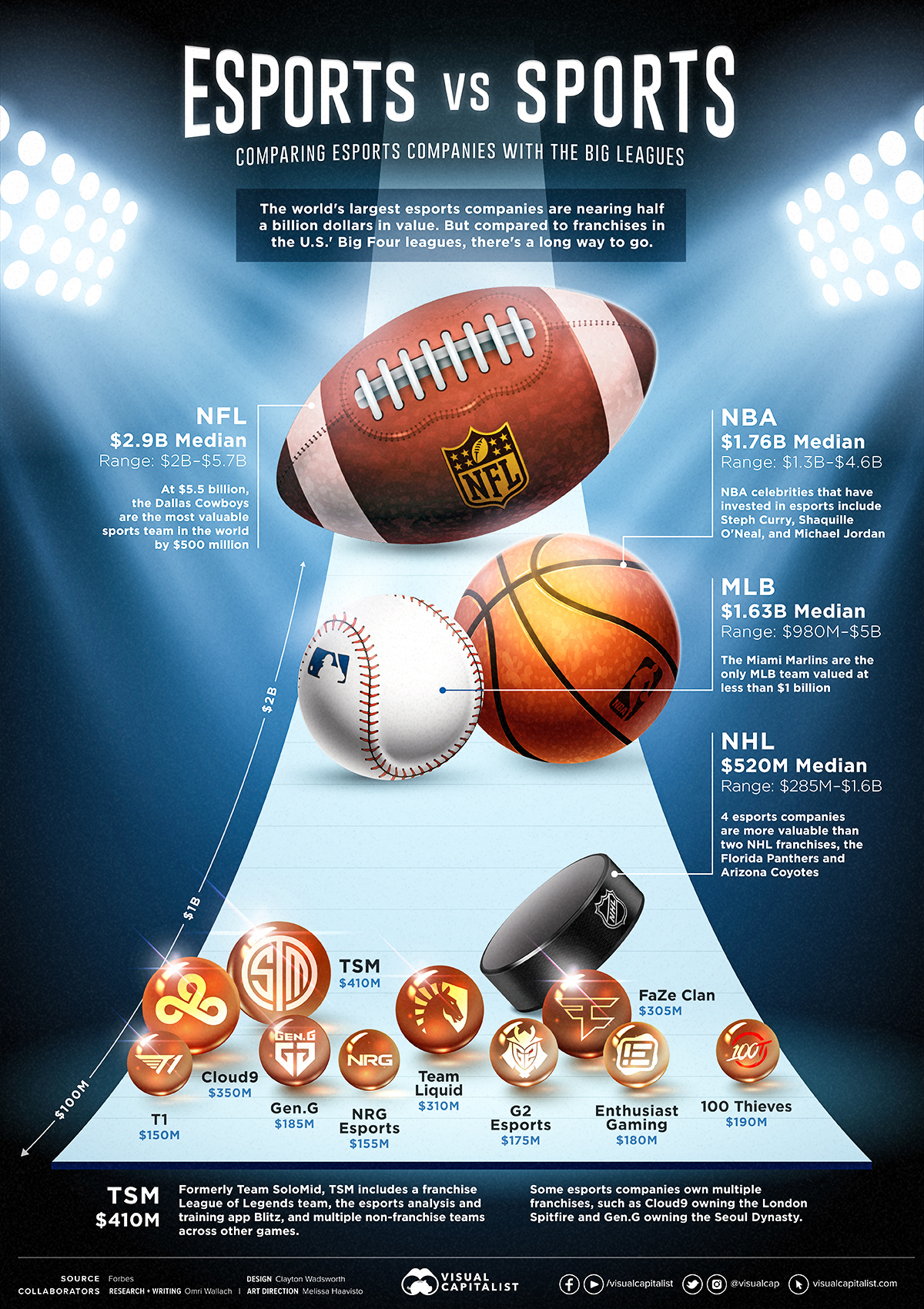
In parallel, the media industry in gaming is growing pretty rapidly. E-sports are getting bigger and better with more engagement from audiences. Telcos are at crossroads as the potential is vast, but they are witnessing shrinking margins and stagnating revenue growth. Esports can be a much-needed boost for the saturating market of streaming esports. The industry is already valued at over 1B+ and will 3x by 2025.
Cloud computing can be seen as a significant tech for new-age games as consumers will not need expensive hardware. Achieving a quick, low latency connection but using the cloud it's complicated, especially if you are using gaming. We can use something called Edge computing, where data is transferred using a network of nearby connected deceives providing many sources, reducing latency. Telcos can provide this solution to the gamers, which could rise exponentially as accessibility would be easier and better.
